Cala Major is about four kilometres from the centre of Palma, on the city’s western coast, and it has everything you need for an easy morning at the beach: a bus stop, facilities and a promenade close by. That is exactly what it is: an urban beach, practical and well connected. It is neither the unspoilt hideaway that appears in some photos nor the tourist trap described in other guides. If you want a morning on the sand near Palma without relying on a car, Cala Major (also spelt Cala Mayor) does the job. If you are after crystal-clear water and genuine calm, this article also explains why it pays to look a little further. To find your way around the city before you set off, our guide to what to do in Palma de Mallorca gives you the full picture.
Cala Major lies on Palma’s western shoreline and belongs to the city itself, which already says a lot about its character: this is a city beach, not a secluded cove. It is surrounded by hotels, residential buildings and landscaped promenades.
What it offers is specific. Cala Major works well if you have a free morning, are staying in Palma or in the area itself, and want a swim without taking the car or planning too much. It also pairs nicely with the Pilar and Joan Miró Foundation and the Marivent gardens, both a short uphill walk away. It is a neighbourhood beach with plenty of facilities: showers, toilets, sun lounger and parasol hire, access ramps and lifeguards in season.
Cala Major beach is around 250 metres long, with fine, light sand and usually calm water, which makes it comfortable for families with children.
The photos of Cala Major you find online tend to show blue water and empty sand, taken outside peak hours and peak months. At midday in August the reality is different: the beach fills up, sun loungers take up a good part of the sand, there are often queues for the showers and parking is hard to find. That doesn’t make it a bad beach; it makes it a city beach in high season, which is exactly what it is.
Out of season, the story changes. From November to April, Cala Major regains a genuine calm: few people, lovely light and the promenade almost to yourself, even if the water no longer invites a swim. We mention it in exactly that context in our guide to surfing in Mallorca.
This is the question we hear most from people staying in central Palma. The short answer: by bus, with no fuss.
EMT, Palma’s city bus service, connects the centre with Cala Major on several lines, and there is a stop about a hundred metres from the sand. The journey from the centre usually takes around 20 to 30 minutes, depending on the time of day and the traffic. Lines and frequencies change between high and low season, so it is worth checking them on the EMT website or app before you leave. For more ways to travel around the island without a car, our guide on how to get around Mallorca without a car has everything organised in one place.
From the centre it is about ten minutes by car or taxi, depending on traffic. Walking is only worth it if you are already staying in the west of the city: from the centre it is about four kilometres.
There is paid parking in the area, with on-street meters and a few car parks nearby. On a Monday in May that is usually enough; on a Saturday in August by mid-morning, it isn’t: spaces rarely free up and finding one is a struggle. In high season the bus saves you that search and drops you about a hundred metres from the sand, which is especially handy if you are going as a family with all the beach gear.
If you prefer to drive, the most sensible thing is to arrive early, before ten in the morning, or to leave it until the afternoon.
The most reasonable time in summer is early morning: from eight to ten there are already people, but the beach isn’t packed yet and the sea is usually calm. From midday onwards, especially in July and August, it is at full capacity and the atmosphere changes completely.
The months with the best balance between quality and calm are May, June and September: the water is already a pleasant temperature, the days are long and there is room on the beach for your towel and for a comfortable swim. Bear in mind that lifeguards usually cover May to October; outside those dates, take extra care when swimming.
In winter, Cala Major follows its own logic. It is popular with locals and is a pleasant place for a walk rather than a swim.
An honest word of warning: if your only free slot is midday in August, consider getting up early or changing your plans. The beach will still be there, but the experience will feel like the city, not like a getaway.
The most natural combination for a morning in the area is the beach plus the Pilar and Joan Miró Foundation, on Carrer de Joan de Saridakis, a short walk uphill. The complex brings together the artist’s work and preserves his former studios, including the one built by Josep Lluís Sert, as well as a museum building designed by Rafael Moneo. It opens Tuesday to Sunday (closed on Mondays), with shorter hours on Sundays and public holidays, so check opening times and prices on its official website before you go. It is also one of the best rainy-day plans if the weather doesn’t cooperate.
Next to the Foundation are the gardens of Marivent Palace, the royal family’s summer residence. The palace itself cannot be visited, but the gardens are open to the public with free entry: more than nine thousand square metres of Mediterranean vegetation and a dozen bronze sculptures by Joan Miró. They close while the royal family is staying there in summer, and opening hours change with the season, so check before you go. The entrance is on Avinguda de Joan Miró.
If what you are after is clearer water and fewer people, you need to look a little further. Palma Bay has coves that don’t feature much in the mass-market lists and offer a different experience: more quiet, deeper water, a better colour.
Cala Vella and Cala Blava are two examples on the southern stretch of the bay. Less urban, less known to passing tourists and with water that is clearly not city water. Getting there by land has its own complications, as with many of the best coves in Mallorca to visit by boat: they are easier to reach from the sea, and the experience changes when you don’t depend on a road to find them.
If you are into snorkelling, our guide to where to go snorkelling in Mallorca covers several of the best spots on the island, Cala Major among them.
Attraction Catamarans’ catamarans sail that part of the bay from Palma Harbour: it is the simplest way to reach those coves without depending on a car or a parking space.
These coves are best enjoyed from the sea
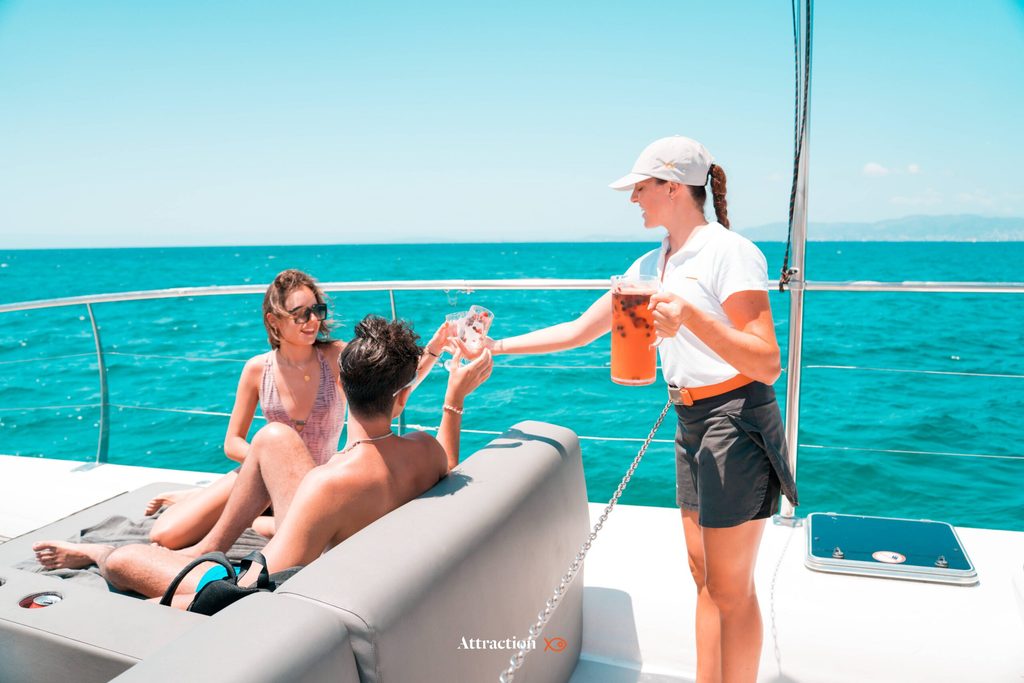
Reaching these coves by road has its complications; from the sea, you don’t depend on a car or a parking space. The Sea Day Tour leaves Palma Harbour in the morning, sails towards Cala Vella and anchors at Cala Blava: crystal-clear water, a swimming stop, catering and a DJ on board. It doesn’t run every day, so check the dates before you plan.
Morning trip · Departing from Palma Departs from Palma Harbour · Catering and DJ included · Drinks and extras not included.On the map, Cala Major sits on Palma’s western coast, about four kilometres from the centre, along the shoreline that leads towards Illetes and Portals. Above the cove, up the hill, stand Marivent Palace and, next to its gardens, the Pilar and Joan Miró Foundation. That sequence of beach, museum and palace defines the area better than any description.
This position makes it one of the closest beaches to the centre for anyone leaving Palma along the coast heading west, and it also explains the concentration of hotels in the area: for decades, access to the sea without a long journey was its main selling point.
By EMT city bus, with several lines connecting the centre with the beach and a stop about a hundred metres from the sand, or in about ten minutes by car or taxi. Check lines and timetables on the EMT website before you leave.
Yes, parking in the area is paid, with on-street meters and a few car parks nearby. In summer it is hard to find a space, and the bus is the most convenient option.
Yes, sun loungers and parasols are available to hire in season. Demand is high, so if you want a lounger without waiting, it is best to arrive before ten.
Yes. The water is usually calm, there are facilities nearby and lifeguards in season: it is one of the most comfortable beaches in the area for families with young children.
Yes, there are public showers and toilets, especially in season. Queues tend to form at peak times.
It has access ramps down to the sand and lifeguards in season. Facilities can vary from year to year, so it is worth confirming them on Palma City Council’s website.
The Pilar and Joan Miró Foundation and the gardens of Marivent Palace, which are free to enter, are a short walk uphill.
It depends on what you are looking for. For a quick morning near Palma, without a car and with every facility, yes. For a quiet cove with crystal-clear water, it is not the best option in the bay. Cala Major beach is practical, not spectacular.
Cala Major delivers on what it promises when it is described without embellishment: easy access from the centre, full facilities and a natural pairing with the Miró Foundation and the Marivent gardens to make the most of your morning. Its limits are just as clear: it is small, it fills up in summer and its water can’t compete with that of the coves in the bay.
The key is to use it for what it is good at: a morning without a car or complicated planning, just a few minutes from Palma. And if on that day you want something more (more quiet, more blue, more space), the bay has more to offer, and the best way to see it is from the sea.
If you’d like to see it that way, Attraction Catamarans’ Sea Day Tour leaves Palma Harbour in the morning and anchors at Cala Blava. It doesn’t run every day: check the available departure dates →